
The Server Was Restored, but Nobody Could Sign In: Anatomy of a Hidden Dependency Failure
A granular autopsy of an enterprise outage where raw image redeployment succeeded without error, yet business services remained offline due to Kerberos time skew, machine account rotation, and missing DNS routes.
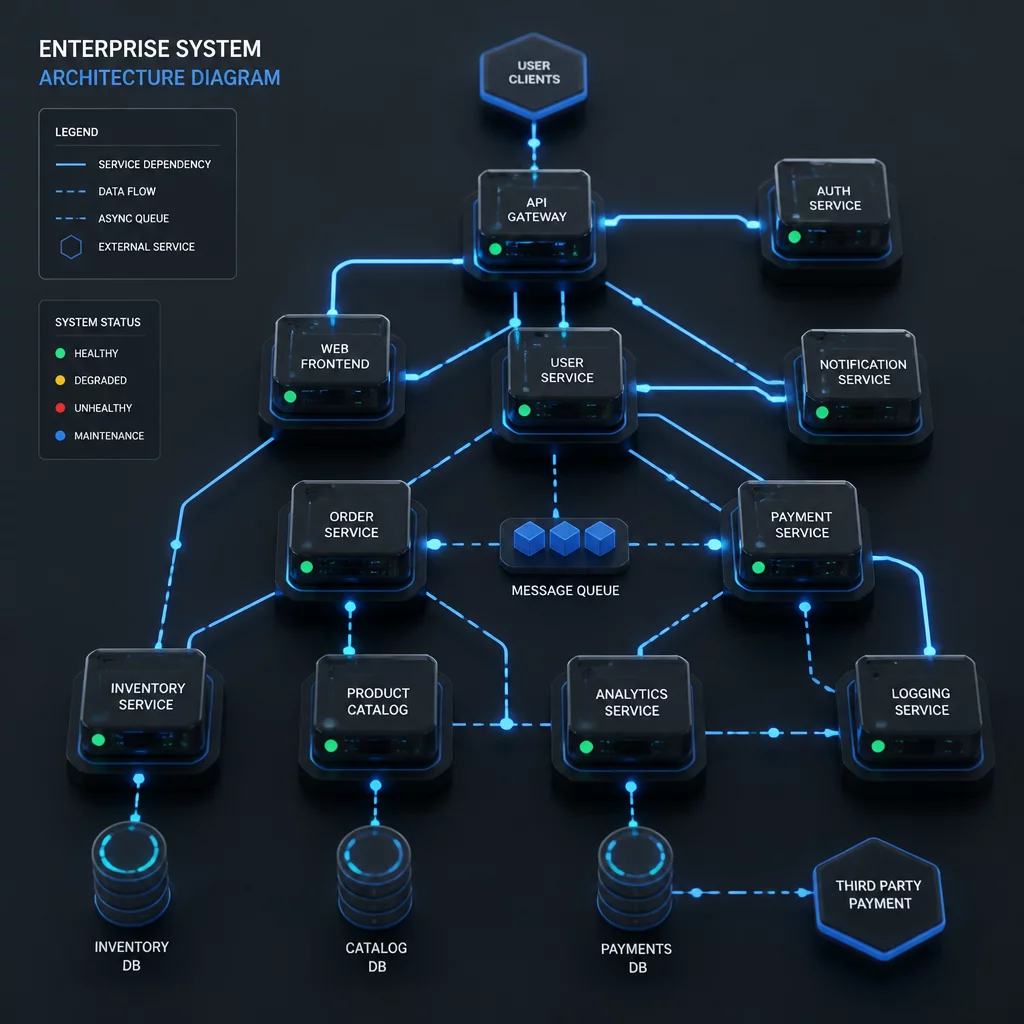
Case Breakdown
6-point analysisWhat Technically Recovered
Bare-metal image injection completed, OS kernel booted, application processes listening on designated ports (443, 8443, 5432). Disk I/O and hypervisor agents reported normal state.
What Remained Unavailable
User authentication failed due to Kerberos time skew, machine account rotation, and missing DNS routes. Business services stayed offline despite a healthy OS and application stack.
Dependency Order
Required bootstrapping order: NTP → Domain Controller → DNS → Secure Channel → Application services. Identity and time must return before any workload can authenticate.
Ownership
Phase 1: Infrastructure & Storage Team (image deployment). Phase 2: Directory & Security Operations (AD trust, Kerberos, time sync). Phase 3: Application Engineering Leads (synthetic transactions, session validation).
Functional Verification
Verification must confirm a functioning workload, not just OS boot: synthetic user login, session token issuance, database read/write probes, and API endpoint responsiveness.
What Should Be Documented Next Time
Record the full dependency chain in the runbook: NTP source, DC availability, DNS routes, secure channel reset steps, and functional verification checklist to execute before declaring recovery complete.
Hardware & Virtual Host State
The enterprise backup image was written back to the physical host without sector mismatches. Hypervisor management agents reported normal disk I/O, network interface binding, and processor utilization.
- Raw partition deployment: Completed (2.4 TB verified block hash)
- Operating System kernel: Booted successfully (systemd / Windows service host)
- Application processes: Listening on designated TCP ports (443, 8443, 5432)
Operational User Access
Despite clean operating system boot parameters, all end-user and operator authentication attempts resulted in credential rejections, ticket expiration alerts, and failed single sign-on handshakes.
- Active Directory Domain Trust: Broken machine account secure channel (Nltest error 0x5)
- Kerberos KDC Ticket Granting: Clock skew exceeded 300 seconds delta threshold
- TLS Certificate Verification: Intermediate CA revocation list unreachable via internal DNS
Infrastructure Telemetry vs Real Business Function
| Verification Layer | Reported Infrastructure State | Underlying Dependency Gap | Actual Functional Outcome |
|---|---|---|---|
| Network Physical Link | 10GbE Up, IP Assigned | VLAN routing table lacked gateway ACL rule for secondary subnet | App could not communicate with directory servers |
| DNS Resolver | 127.0.0.1 Query OK | Primary DNS pointer directed to retired standby node | Service Principal Name (SPN) lookup timeouts |
| System Clock (NTP) | CMOS Local Clock Active | Host time was frozen at the snapshot creation timestamp | Kerberos replay attack protection rejected all tokens |
| Machine Password | Registry Values Present | AD Domain Controller had rotated computer password 14 days prior | Trust relationship between workstation and domain failed |
Core Architecture Rule: Image Health ≠ Service Availability
A successful block-level deployment is merely step zero. Operational availability is defined entirely by authenticated end-user transaction flow through dependent network identity systems.
Related Architecture & Case Analysis
View All MaterialsStep-by-step operational pipeline to avoid identity desync and certificate CRL lockouts during physical host rebuilds.
Interactive map detailing core identity, DNS resolution, time stratum, and storage fabric interconnections.
Standard operating procedures for infrastructure validation, sign-off chains, and automated synthetic tests.